
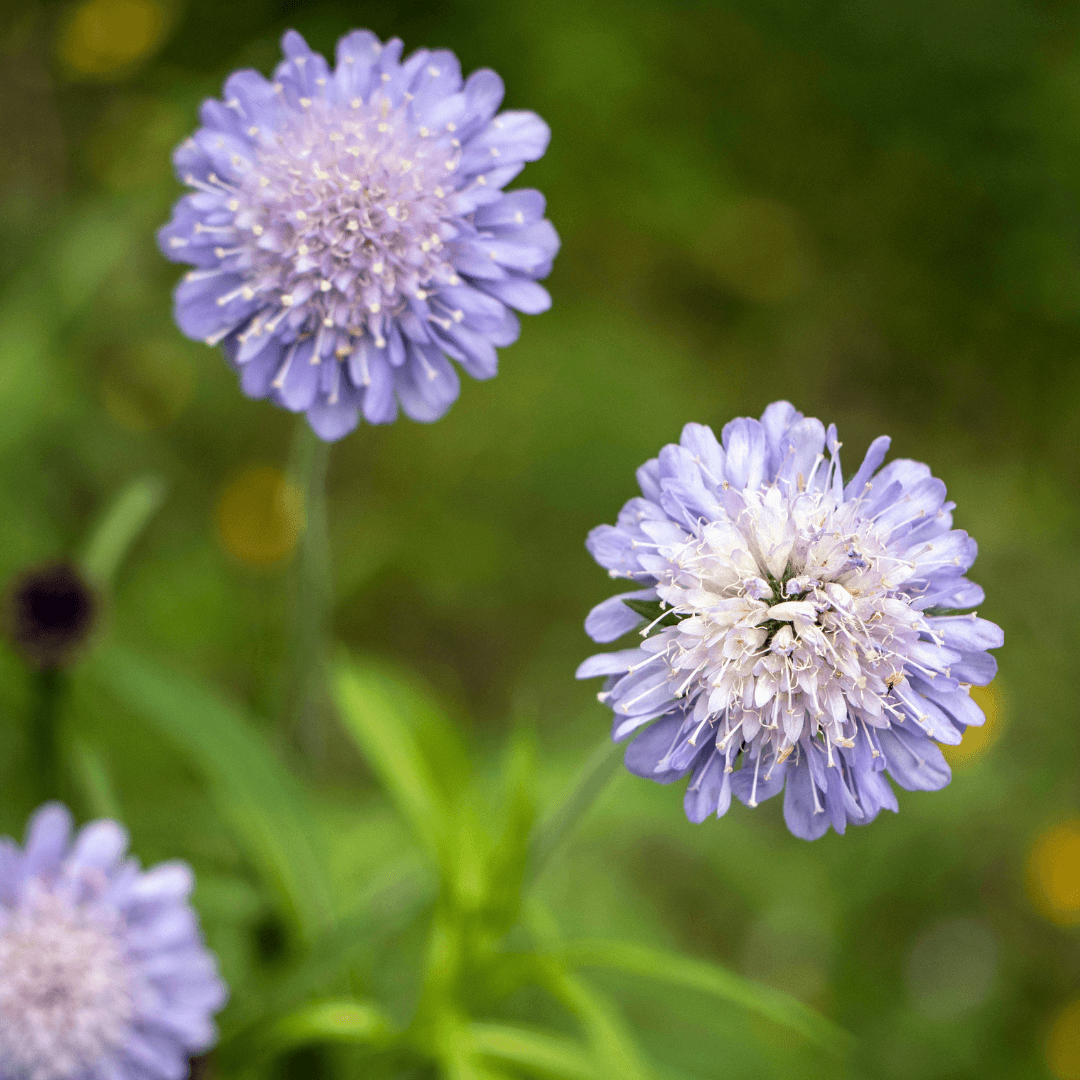
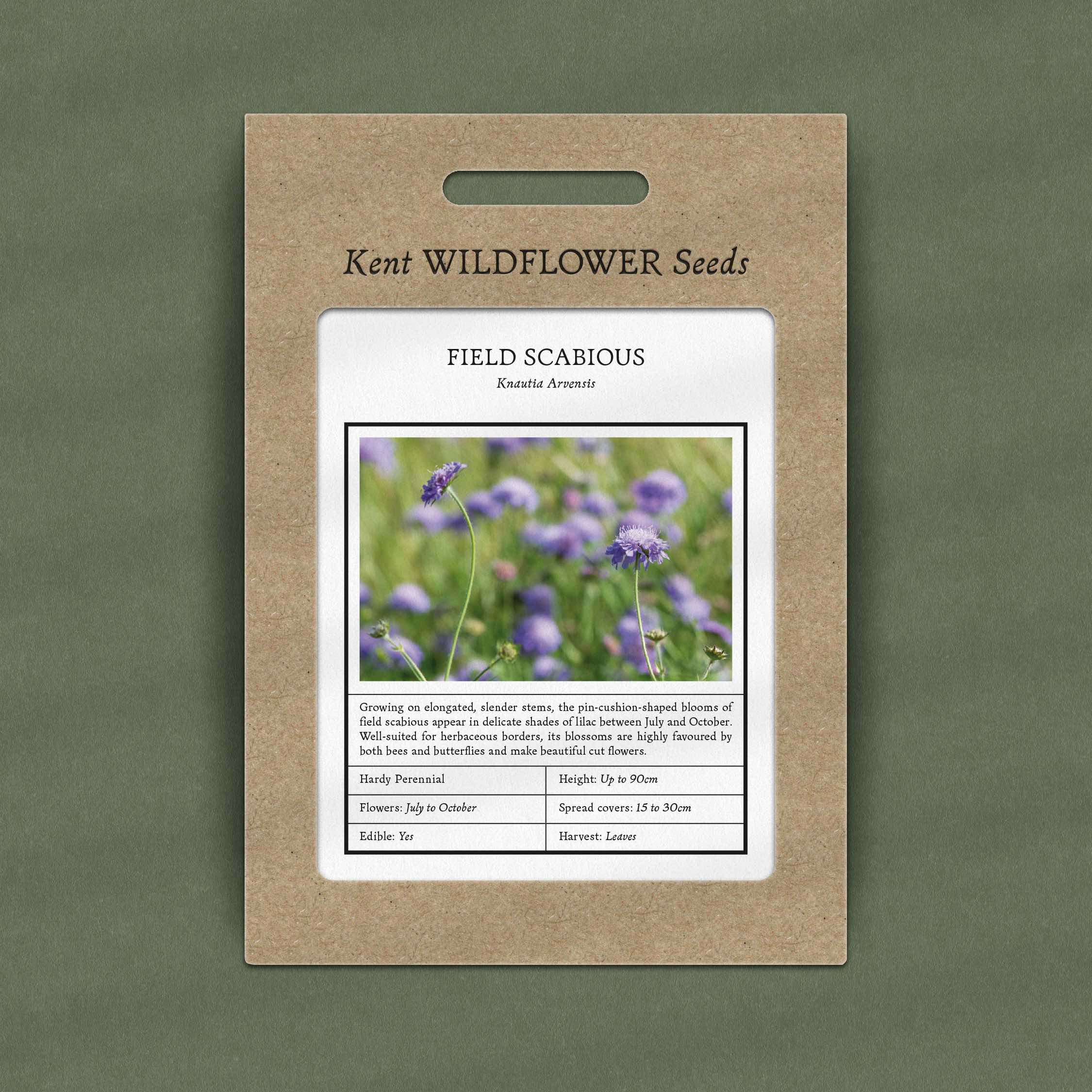
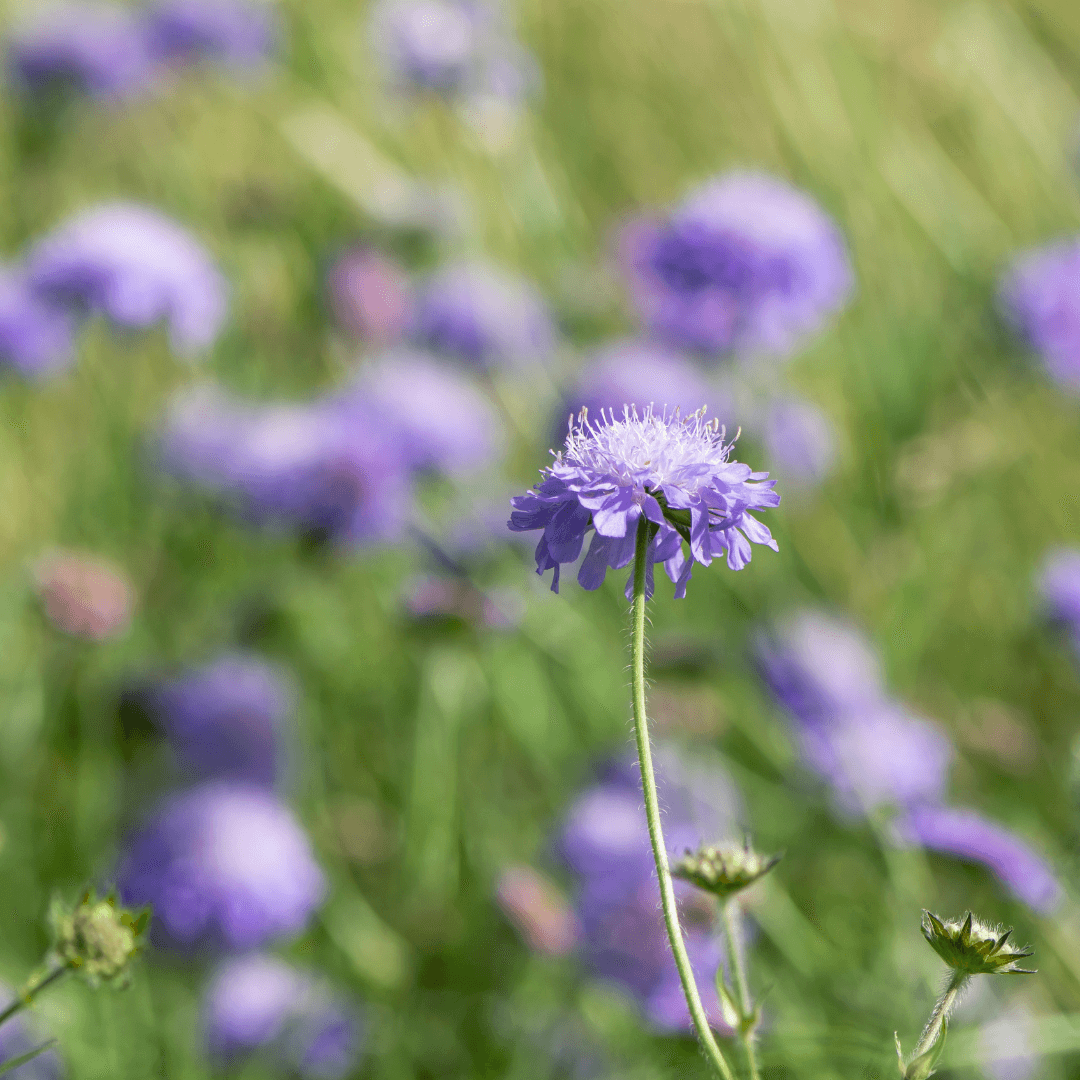




This perennial wildflower is both graceful and resilient, thriving in open, sunny spots where the soil is well-drained. Field Scabious blooms reliably from mid-summer into early autumn, offering a long season of interest and a welcome food source for pollinators long after many other flowers have faded. Over time it forms loosely clumping plants that sit comfortably among grasses and other meadow species. With its long stems and airy blossoms, it’s equally appealing in borders, wild areas and cut-flower displays.
How tall does Field Scabious grow?
It typically reaches 60–100 cm, with flowering stems rising gracefully above the foliage.
Is Field Scabious good for butterflies?
Very much so, it’s particularly popular with meadow butterflies and bumblebees thanks to its open, nectar-rich flowers.
Does it mind poor soil?
Field Scabious seeds are quite happy in low-nutrient soils, especially chalky or sandy ground, as long as it drains well.
Will it spread in the garden?
It forms modest clumps and may self-seed lightly, but it’s generally well-behaved and easy to manage.
How long does it take to flower from seed?
As a perennial, it usually flowers in its second year, although strong early sowings can occasionally bloom sooner.
Is it suitable for pots?
Field Scabious seeds can be planted in deep containers with free-draining compost, but it’s at its best when planted directly into the ground.
When should I cut it back?
Stems can be trimmed in late autumn once they’ve finished flowering, or left standing for winter structure and wildlife shelter.
Can I use Field Scabious as a cut flower?
Yes, its airy blooms and tall stems make it lovely in relaxed, meadow-style arrangements.
When to sow: Autumn or spring
Lifecycle: Perennial
Where it grows well: Sunny borders, meadows, chalk grassland, and well-drained soils
Also known as: Blue Buttons, Lady’s Pincushion, Pincushion Flower, Butterfly Scabious, Gypsy Rose