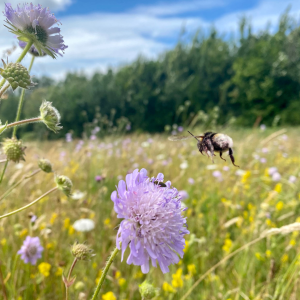
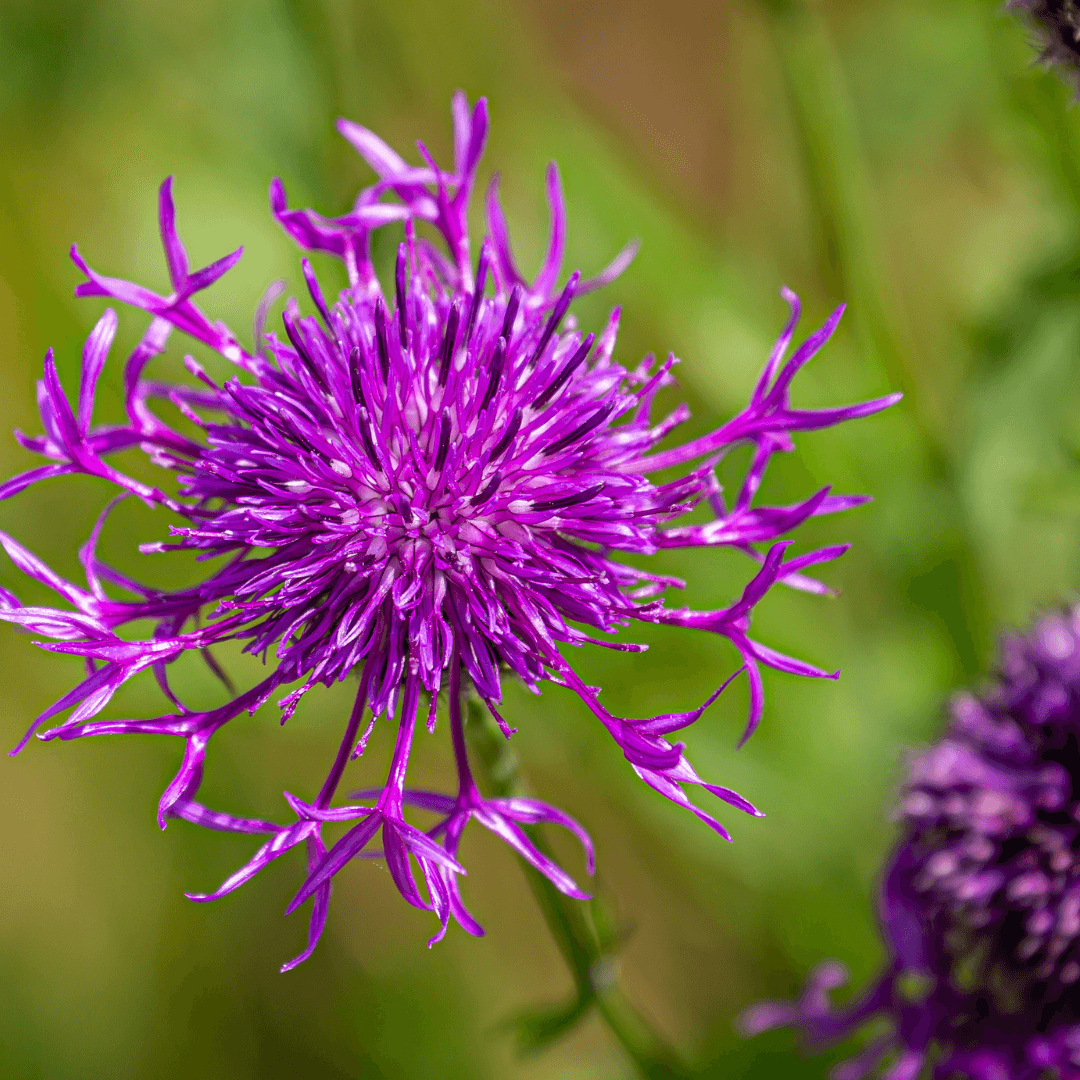
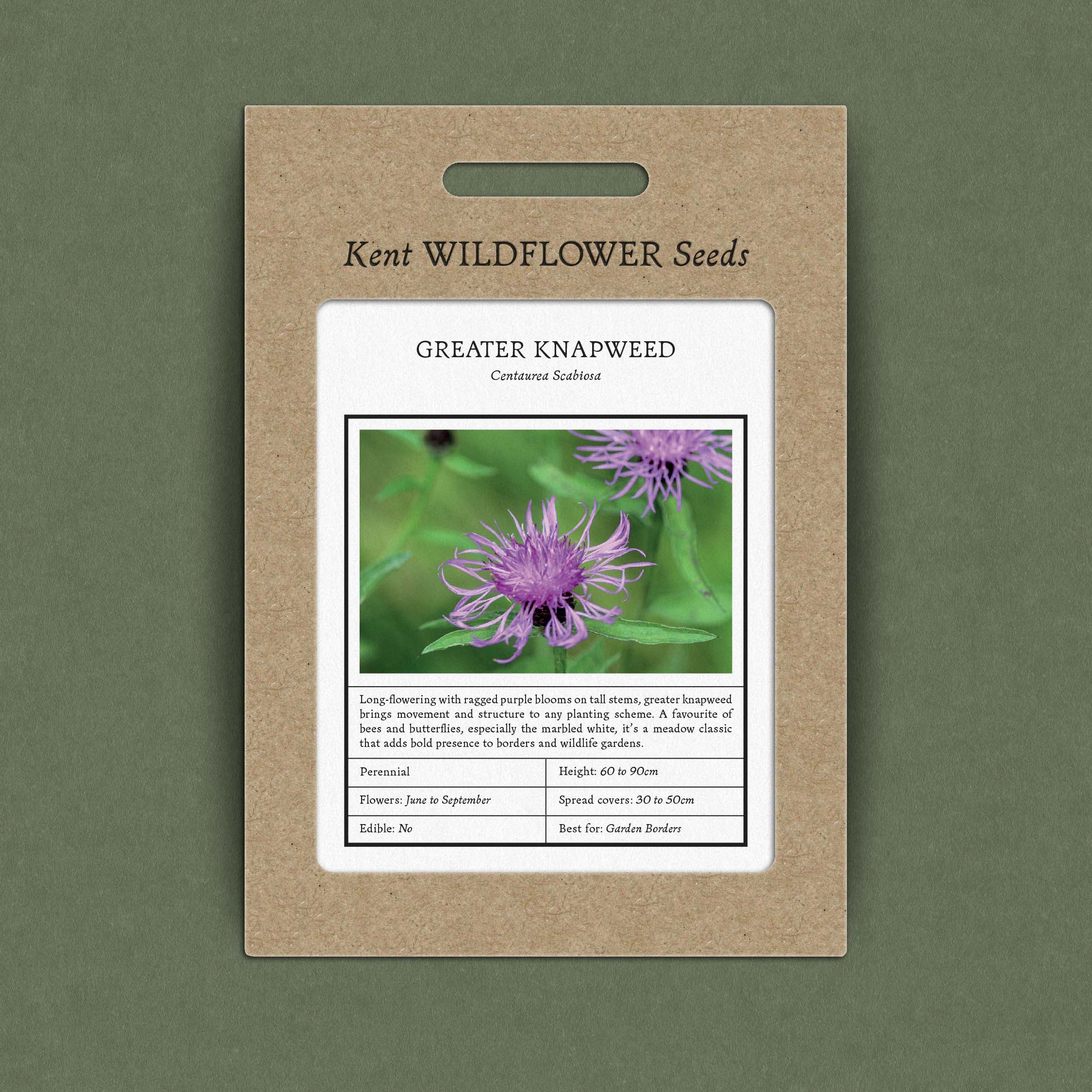
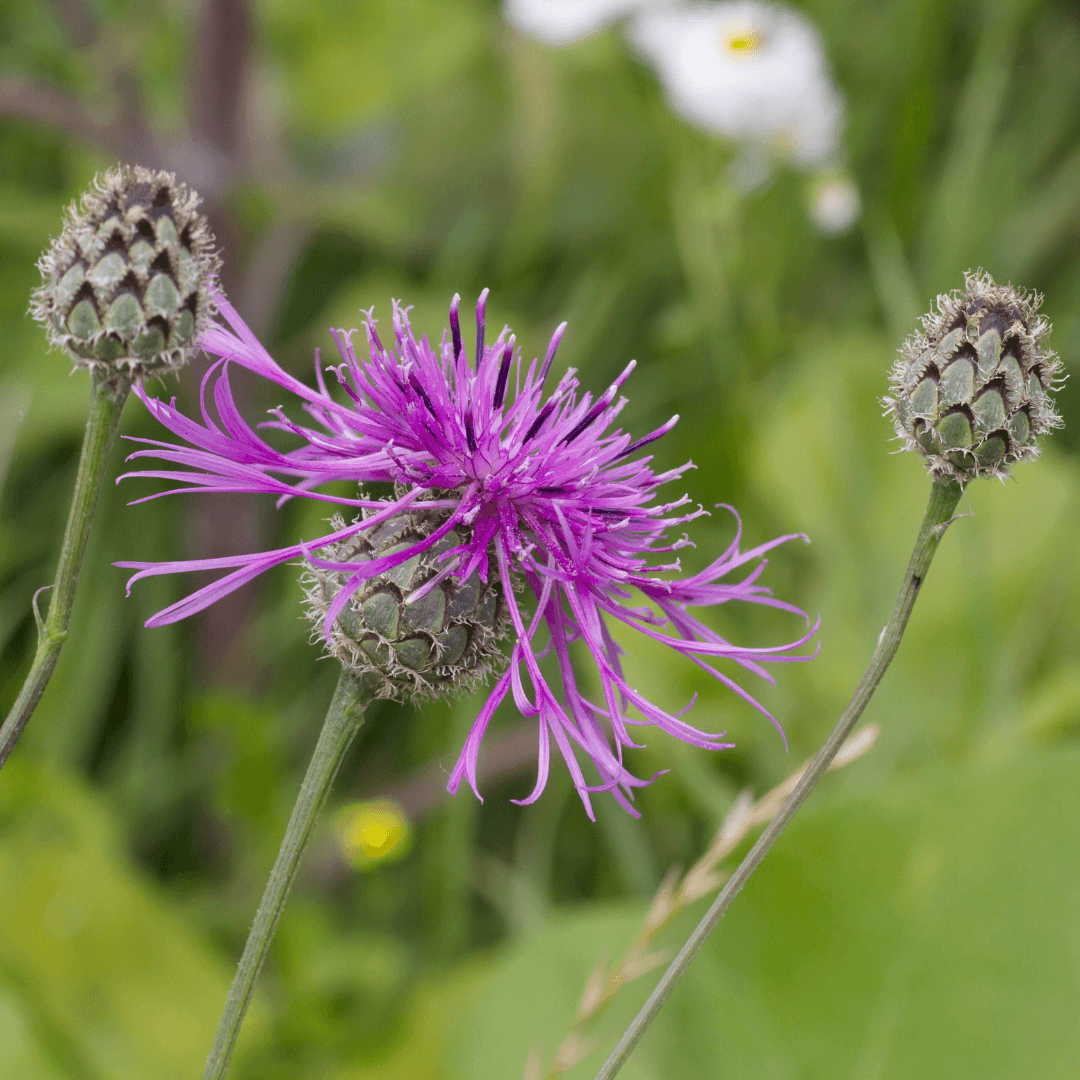
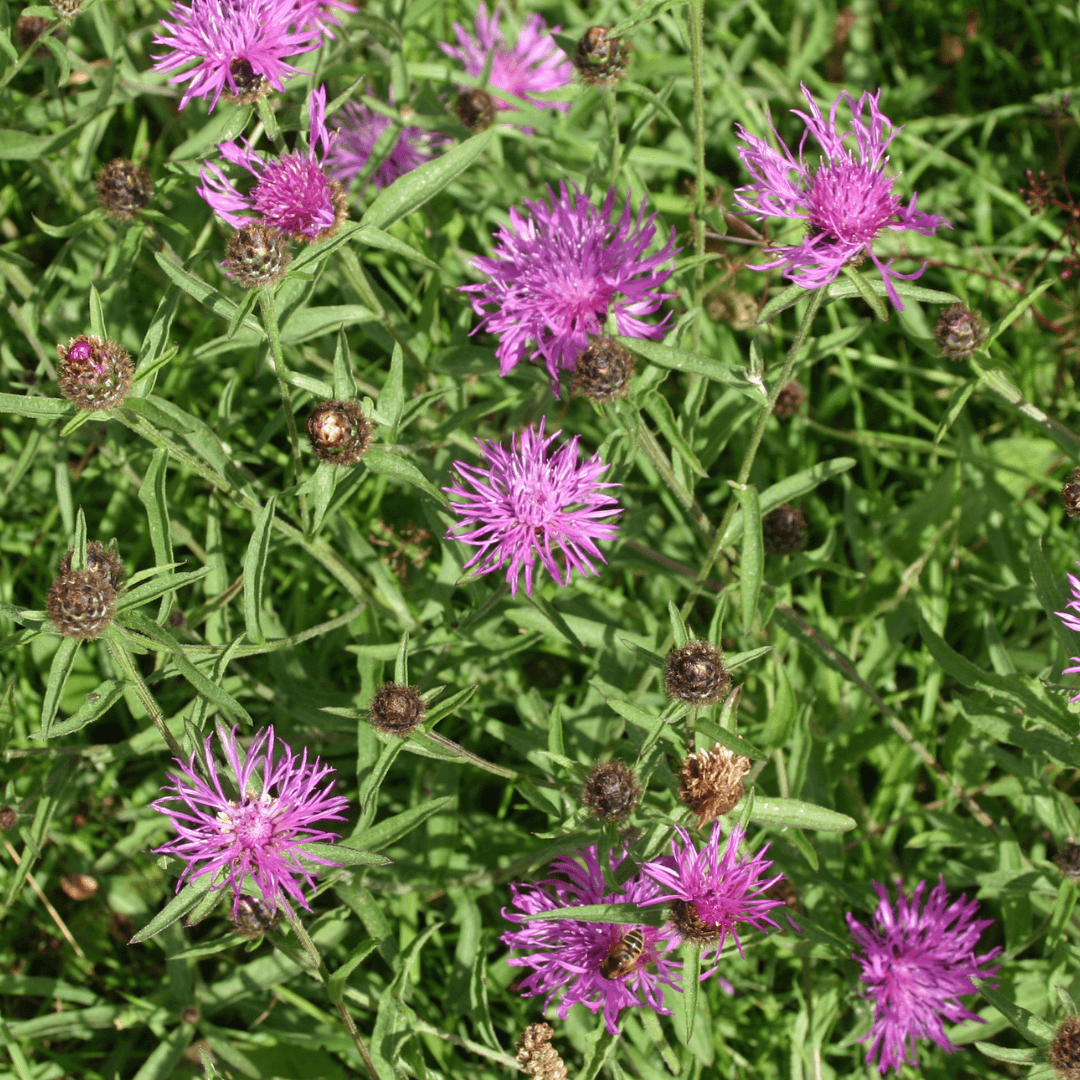
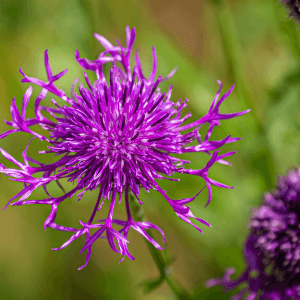

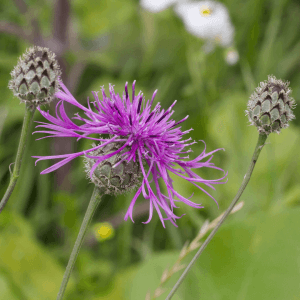
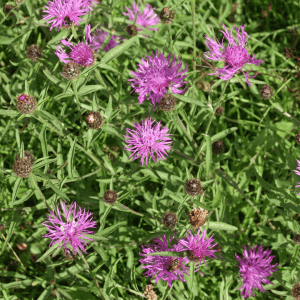
A hardy perennial, Greater Knapweed flourishes in open, sunlit positions and thrives in poorer soils where many other plants might struggle. It flowers steadily from mid-summer into early autumn, providing an extended nectar supply for pollinators during the warmest months. Over time, it forms sturdy clumps that blend beautifully with grasses and other meadow species. Its long stems also make it a natural choice for relaxed cut-flower arrangements, adding texture and a wild, meadowy flourish.
How tall does Greater Knapweed grow?
It typically reaches 60–90 cm, with robust stems that hold their flower heads proudly above surrounding plants.
Is Greater Knapweed good for pollinators?
Exceptionally so, bees, butterflies and many beneficial insects visit it throughout its long flowering season.
Does it need rich soil?
Not at all, Greater Knapweed seeds are happiest in low-nutrient, well-drained soils, particularly chalky or sandy sites.
Will it spread in the garden?
It forms neat clumps and may self-seed lightly, but it’s generally easy to manage and not invasive.
Is it suitable for clay soil?
Greater Knapweed seeds can tolerate heavier soils if drainage is improved, but it performs best in free-draining ground.
Can I grow Greater Knapweed in a border?
Yes, it adds lovely height and colour to mixed borders, especially in naturalistic or wildlife-friendly schemes.
Does it make a good cut flower?
It does, the large, thistle-like blooms bring wonderful structure and vibrant colour to informal arrangements.
When should I trim the plants back?
Cut back spent stems in late autumn, or leave them overwinter for seed-eating birds and additional habitat.
When to sow: Autumn or spring
Lifecycle: Perennial
Where it grows well: Sunny borders, meadows, chalk grassland, and low-nutrient, well-drained soils
Also known as: Hardheads