
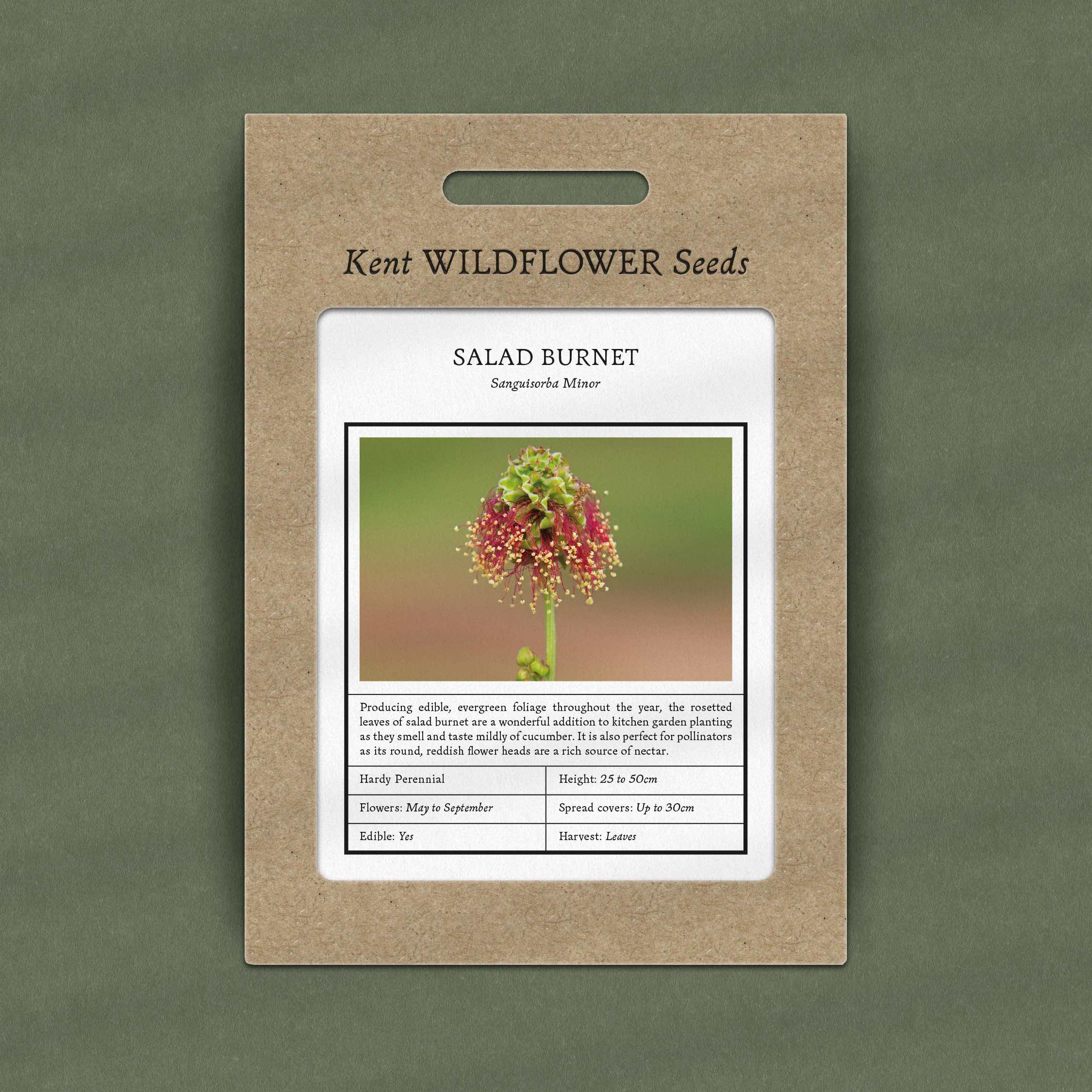


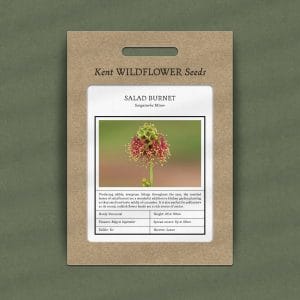


A hardy perennial, salad burnet thrives in full sun and well-drained soils, including poorer, sandy, or chalky ground. Its long flowering season, from May to September, provides a steady source of nectar for bees and insects, while its finely cut foliage adds a soft, airy texture to borders or wildflower meadows.
An excellent choice for a cut flower garden, the architectural flower heads last well in a vase. The leaves can be harvested for salads or garnishes, and the plant will self-seed lightly if left undisturbed, creating a relaxed, naturalised feel over time.
How tall does Salad Burnet grow?
It generally reaches 30–50 cm, forming compact, clumping plants ideal for edging or ground cover.
Is Salad Burnet edible?
Yes, its young leaves have a mild cucumber flavour and are perfect for salads, sandwiches, or herbal teas.
Does it attract pollinators?
Absolutely, bees and other insects are drawn to its small, rounded flower heads.
Will it self-seed?
Yes, but gently, leaving a few seed heads will allow it to reappear naturally without becoming invasive.
Can it tolerate poor soil?
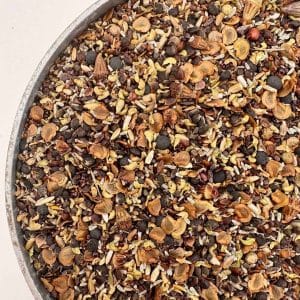
Yes, Salad Burnet seeds thrive in well-drained soils of moderate fertility, including chalky or sandy ground.
When does it flower?
From May to September, producing small, clustered flower heads that complement its feathery foliage.
Is it suitable for containers?
Yes, Salad Burnet seeds grow well in deep pots with free-draining soil, making it a versatile choice for patios or kitchen gardens.
Does it require much maintenance?
Very little, deadheading can prolong flowering, but it’s generally a low-maintenance, easy-to-grow perennial.
When to sow: Spring or autumn
Lifecycle: Perennial
Where it grows well: Sunny borders, meadows, grasslands, and well-drained soil
Also known as: Sanguisorba minor