
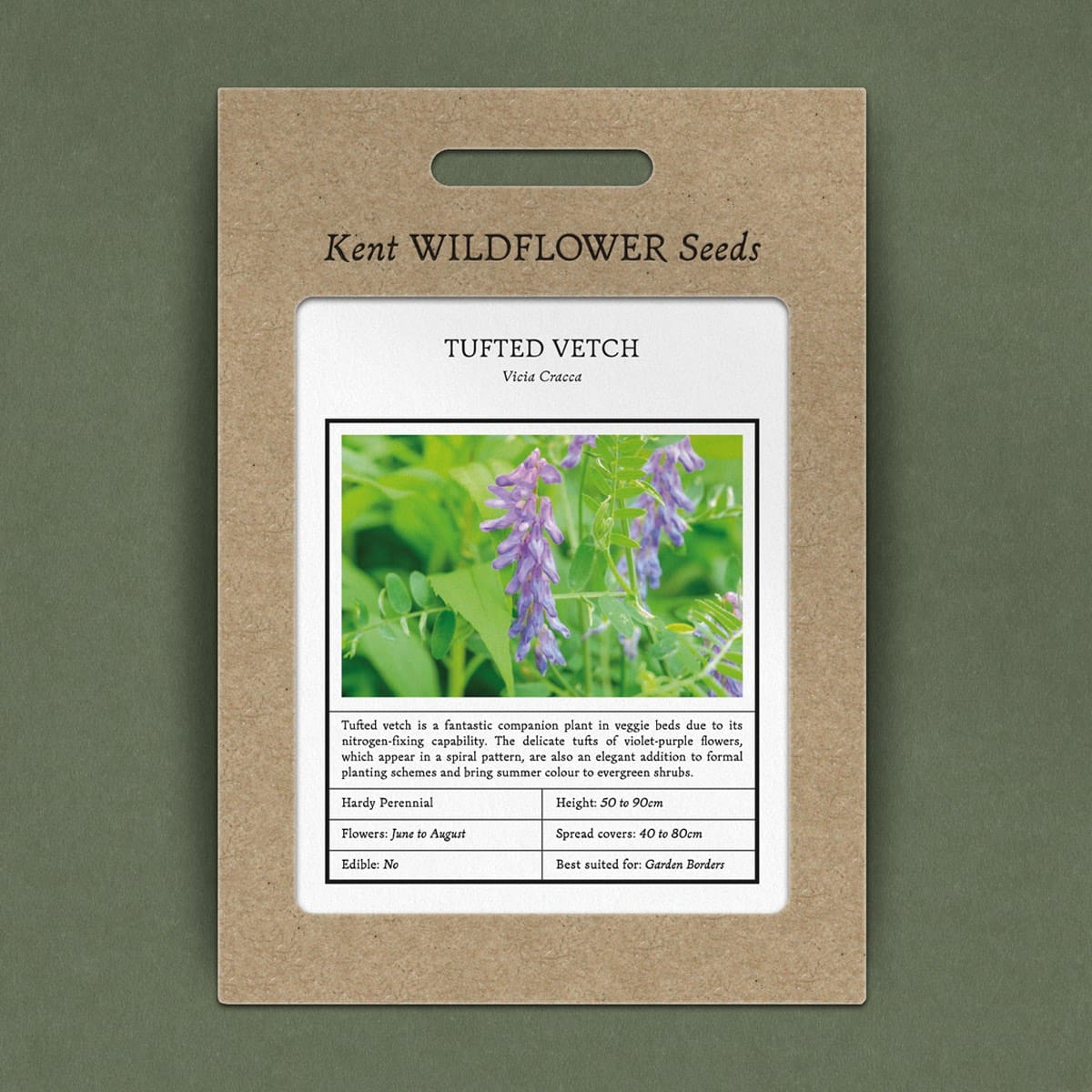




A perennial legume, Tufted Vetch is a natural soil improver, fixing nitrogen to benefit surrounding plants. It thrives in full sun or light shade and prefers moderately fertile, well-drained soil, though it’s adaptable to most soil types. Flowering from late spring to summer, it provides nectar for bees and other pollinators. Left to its own devices, it can self-seed, gently spreading through borders or meadows. Its trailing stems also make it a striking addition to mixed plantings, adding height and a sense of wild beauty.
How tall does Tufted Vetch grow?
Its climbing stems can reach 1–2 meters, scrambling over fences, hedges, or other plants.
Is Tufted Vetch good for pollinators?
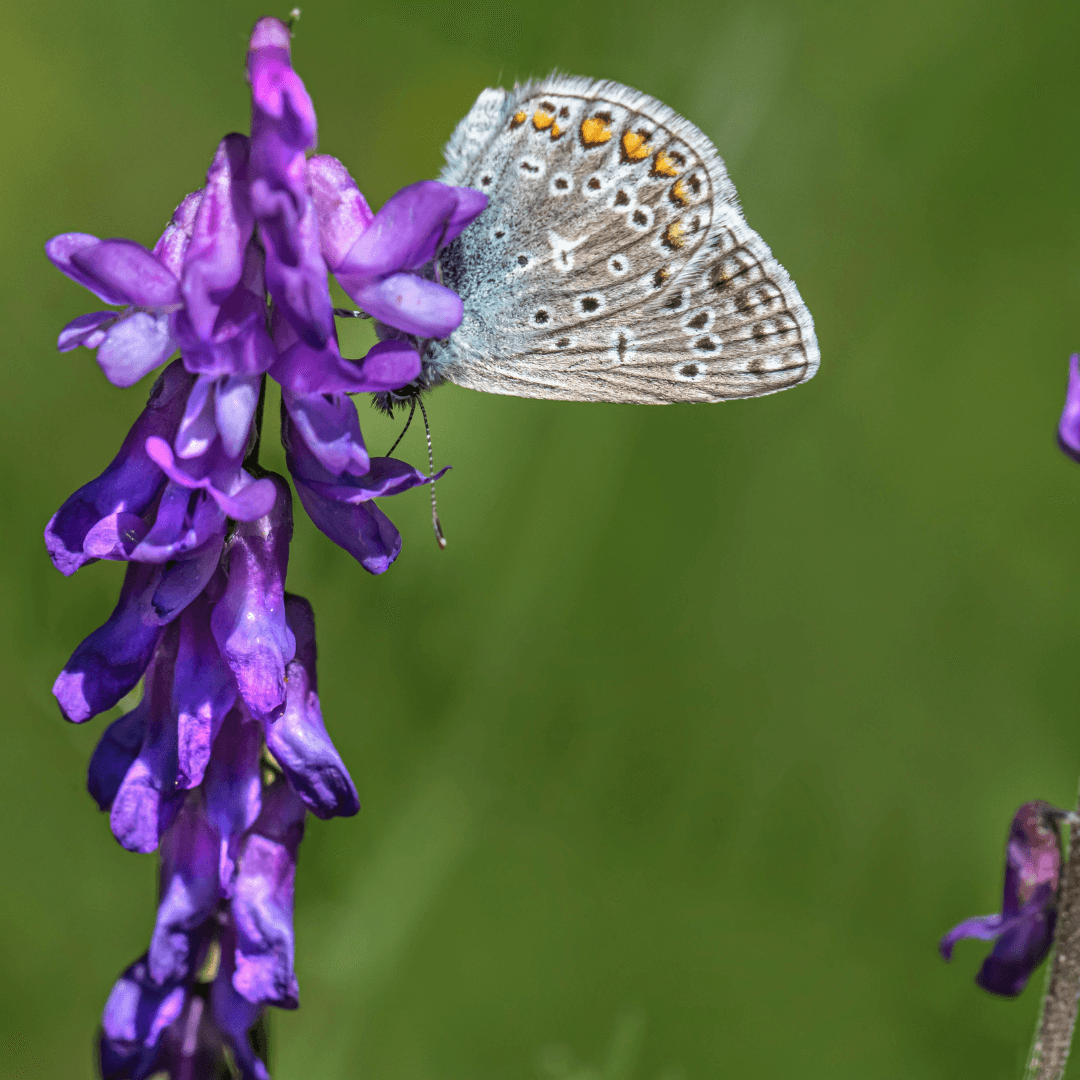
Yes, the purple pea-like flowers are a magnet for bees, butterflies, and hoverflies.
Can it grow in partial shade?
It tolerates light shade but flowers best in full sun.
Will it spread aggressively?
Tufted Vetch can self-seed if left alone, but it is generally well-behaved and easy to manage.
Does it improve soil?
Yes, as a legume, it fixes nitrogen, enriching the soil for other plants nearby.
When does it flower?
From May to July, it produces a long display of nectar-rich blooms.
Is it suitable for container planting?
Tufted Vetch seeds have a similar growth habit to sweet peas and can be grown in deep containers with canes for support, though it performs best in the ground.
Does it need staking?
Light support may help if you want it to climb vertically, but it will naturally trail or scramble over nearby plants.
When to sow: Spring or autumn
Lifecycle: Perennial
Where it grows well: Sunny borders, meadows, hedgerows, well-drained soil
Also known as: cow vetch, bird vetch, blue vetch, fingers and thumbs, cat peas