
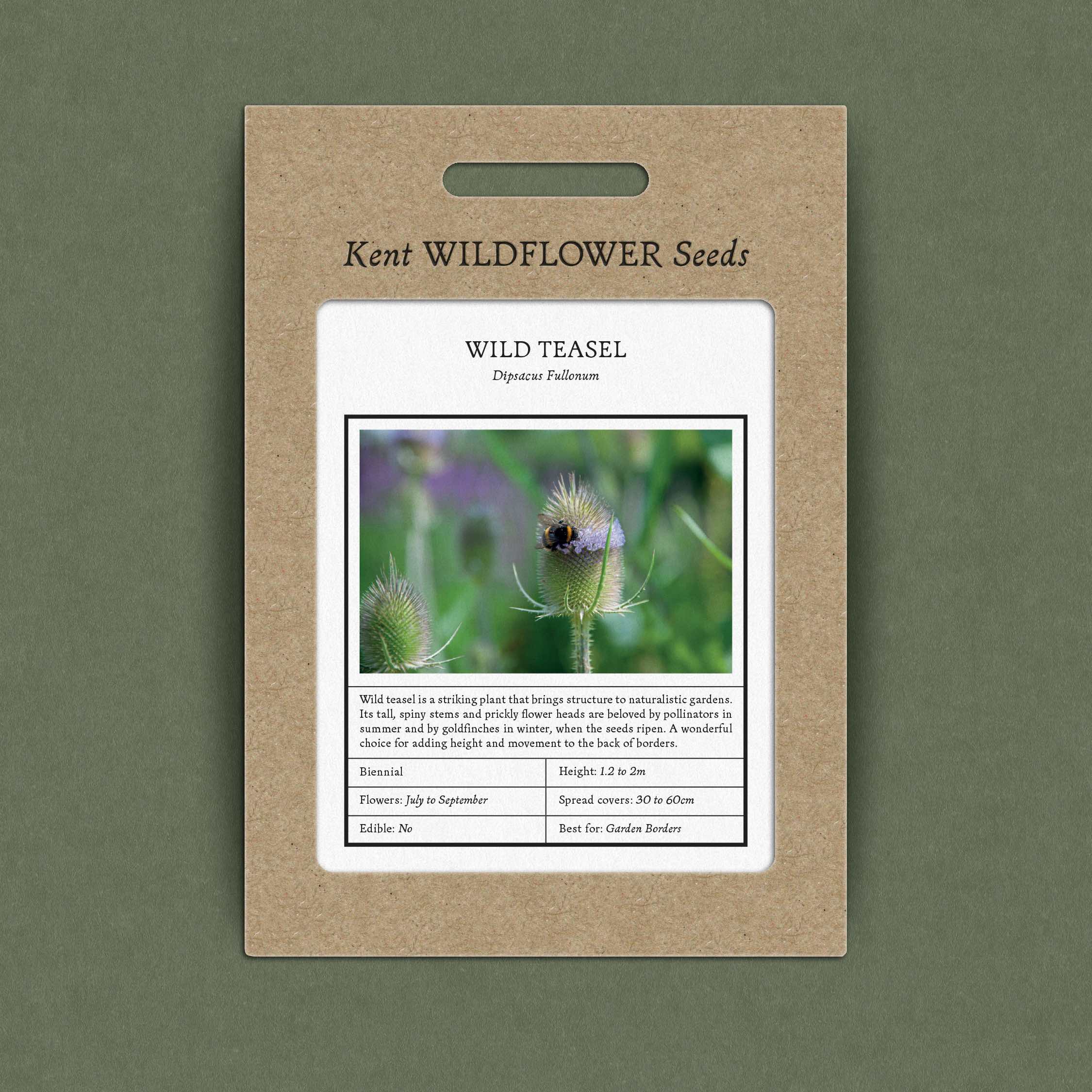


A biennial, wild teasel spends its first year establishing a rosette of spiny leaves before sending up tall flowering stems the following season. It thrives in full sun and well-drained soils, tolerating poor or dry ground where many plants struggle. Its flowers provide nectar for pollinators, and the distinctive seed heads are a valuable winter food source for small birds like goldfinches. Left to self-seed, teasels can naturalise gracefully, adding vertical interest and wildlife value to wildflower meadows or naturalistic borders.
How tall does Wild Teasel grow?
It can reach 1.5–2 meters, making it one of the tallest wildflowers in a meadow or border.
Does it attract wildlife?
Yes, the nectar-rich flowers draw bees and butterflies, while the seeds feed goldfinches in winter.
Can Wild Teasel grow in partial shade?
It prefers full sun, but can tolerate light shade with slightly reduced flowering. If Wild Teasel seeds are planted in shaded areas, make sure they get at least 4-5hrs of direct sunlight per day.
Will it self-seed?
Yes, allowing some seed heads to mature will encourage gentle natural regeneration year after year.
Is it hardy?
Yes, it’s a tough biennial that survives cold winters and low-nutrient soils.
Can it be used in flower arrangements?
Yes, dried Wild Teasel heads are popular in natural, rustic bouquets and crafts.
Does it need fertile soil?
No, Wild Teasel seeds thrive in lean, well-drained soils, making them low-maintenance and adaptable.
When does Wild Teasel flower?
Typically from July to September, providing late-season colour and nectar for insects.
When to sow: Autumn or spring
Lifecycle: Biennial
Where it grows well: Sunny borders, meadows, field edges, and well-drained soils
Also known as: Venus’ Basin